Policy news for foreigners
News and policy changes that affect foreigners living in Korea — visas, jobs, taxes and insurance. Each article links to its official Korean source; newest first.
December 2026 in Korea: Christmas (December 25) falls on a Friday + 5 things to finish before year-end
December 2026 has only one official public holiday: Christmas (성탄절) on December 25, which falls on a Friday. It is also a good time to check your ARC expiry date and health insurance and to prepare documents for the year-end tax settlement season (연말정산) that opens early in 2027.
2026 electricity and heating subsidy (에너지바우처): who is eligible, how much, register until December 31, 2026
The 2026 Energy Voucher (에너지바우처) can be used from July 1, 2026 to May 31, 2027 to pay electricity, gas, and district heating bills or to buy kerosene, LPG, and coal — 295,200–701,300 won for the whole year depending on the number of people in the household, with registration until December 31, 2026. Foreigners are eligible only in certain special cases.
Comprehensive income tax interim prepayment (종합소득세 중간예납): deadline November 30, 2026, who must pay, how to pay in installments
Foreigners who are self-employed (사업소득) in Korea — owners of restaurants, shops, personal service businesses — need to know: the 2026 interim prepayment deadline is November 30, 2026. If the prepayment amount is under 500,000 won, no notice is sent (but this is not an exemption — it is only carried over to the next period); an amount above 10,000,000 won may be partly paid late (분납) within 2 months.
Seoul job fair for foreigners on November 18, 2026: on-site interviews and visa consultations — register online in advance
The Seoul Metropolitan Government is holding the 2026 job fair for foreigners (SEOUL GLOBAL JOB FAIR 2026) on Wednesday November 18, 2026, 10:00–17:00, at SETEC (Gangnam): on-site interviews, recruitment consultations, and visa and legal consultations. Job seekers register on the official website 2026seouljobfair.com.
The year-end tax settlement preview service (연말정산 미리보기) usually opens between late October and mid-November: how foreign workers should use it
Every year, between late October and mid-November, the National Tax Service (국세청) opens the 연말정산 미리보기 service on Hometax (in 2025 it opened on November 5), letting employees preview whether they will get a tax refund or owe additional tax at the year-end settlement early the following year — foreign workers with income in Korea can all use it.
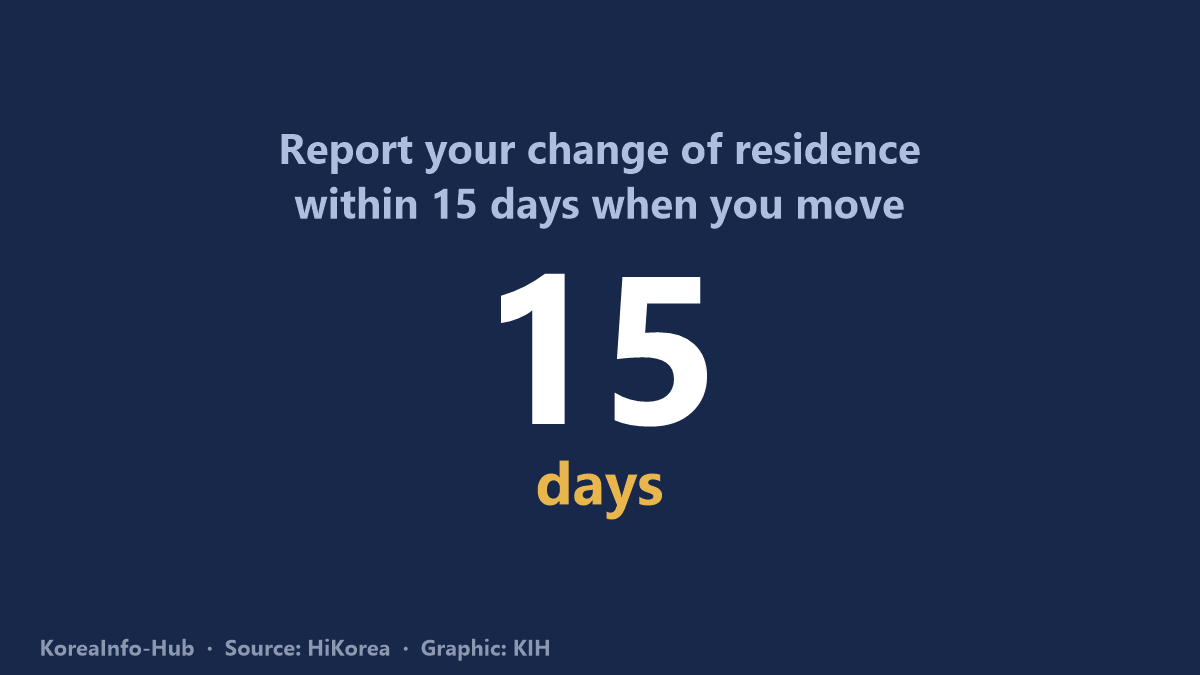
Moving in Korea? Report your change of residence (체류지변경신고) within 15 days
Foreigners who change their place of residence in Korea must report the change within 15 days under the Immigration Act. Failure to report may result in a criminal fine (벌금) of up to 1,000,000 won. You can report online through HiKorea, or in person at the 시·군·구 / 읍·면·동 office of your new address or at the 출입국·외국인관서 with jurisdiction over it.
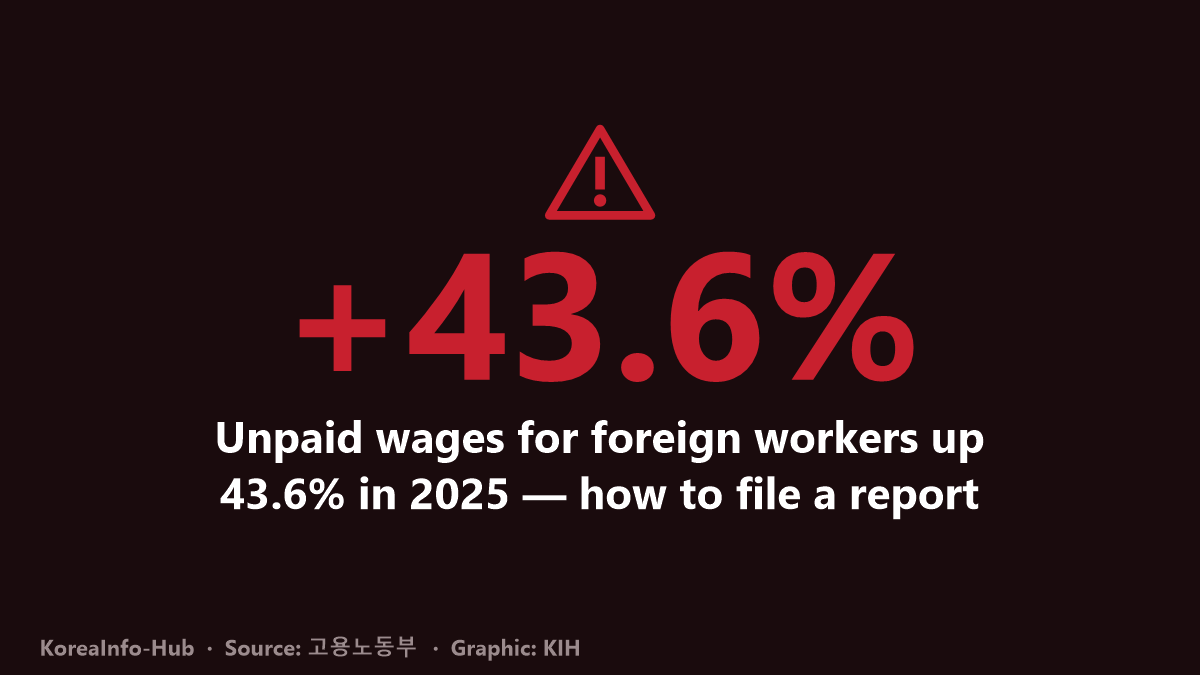
Warning: Unpaid Wages Among Foreign Workers Surged 43.6% in 2025 — How to File a Report If You Are Owed Wages
Figures provided by the Ministry of Employment and Labor to the National Assembly show that total unpaid wages (임금체불) owed to foreign workers reached 154.8 billion won in 2025, up 43.6% from 2024; the first half of 2026 alone has already recorded 75.4 billion won. Here is how to file a report if you are owed wages.
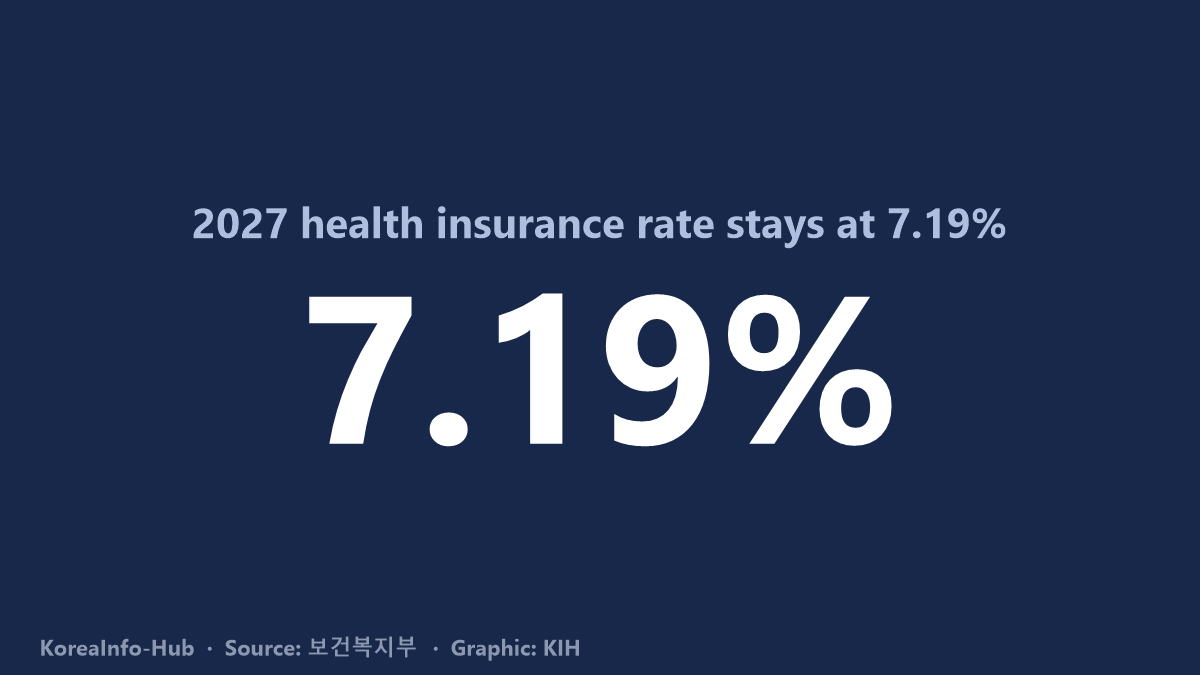
2027 Health Insurance Rate Stays at 7.19%: Wage Deductions Unchanged
Korea's Ministry of Health and Welfare has confirmed that the 2027 national health insurance premium rate (건강보험료율) will stay at 7.19%, the same as in 2026 (in 2026 it rose from 7.09% to 7.19%). Good news for foreign workers: the health insurance deduction from wages is unchanged.
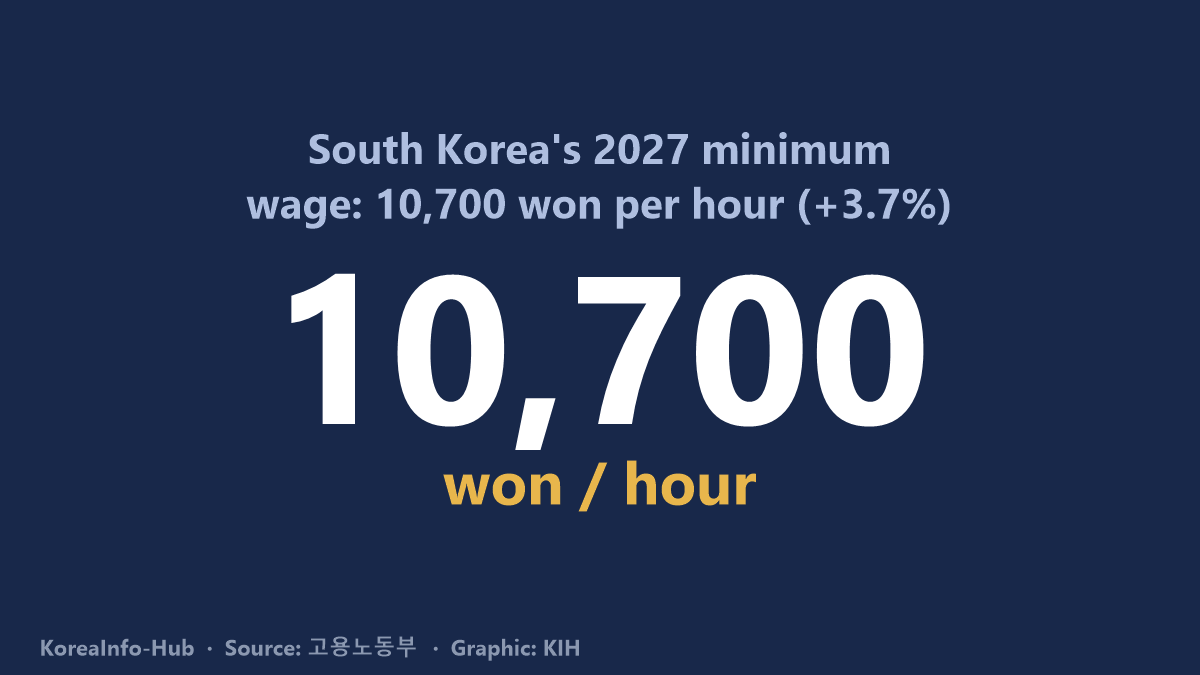
2027 Minimum Wage: 10,700 Won/Hour (+3.7%)
From January 1, 2027, South Korea's minimum wage officially rises to 10,700 won per hour — an increase of 380 won (3.7%) from the 2026 rate of 10,320 won. The new rate applies nationwide, regardless of nationality or visa type (E-9, E-7, etc.).
Vietnamese E-9 workers in Korea: how to get back your pension contributions when you return home (반환일시금)
Vietnamese workers with E-9 (EPS) status who have paid into Korea's National Pension (국민연금) can receive back all the contributions they paid plus interest when they return home — called 반환일시금 — even though the Korea–Vietnam social security agreement currently applies only to the exemption from double contributions.
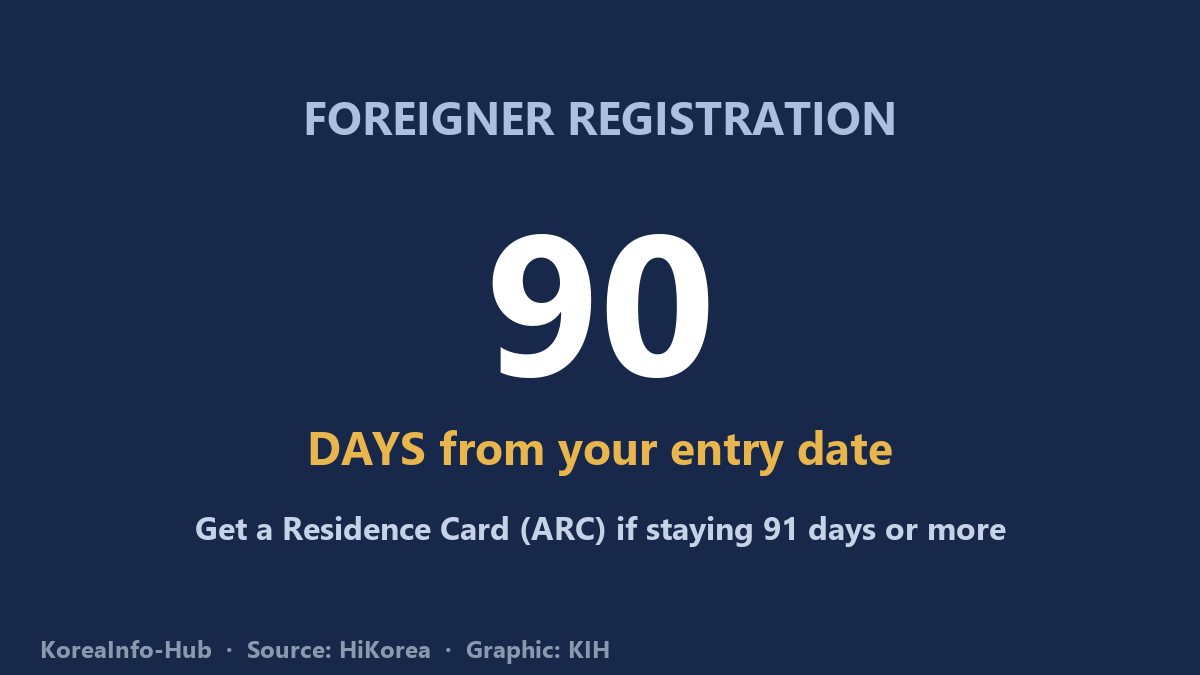
Foreigner registration (외국인등록) in your first 90 days: documents, fees and what to know
If you stay in Korea for 91 days or longer, you must complete foreigner registration and get a residence card (외국인등록증/ARC) within 90 days of your entry date. A guide to documents, fees, processing time and penalties for late registration.
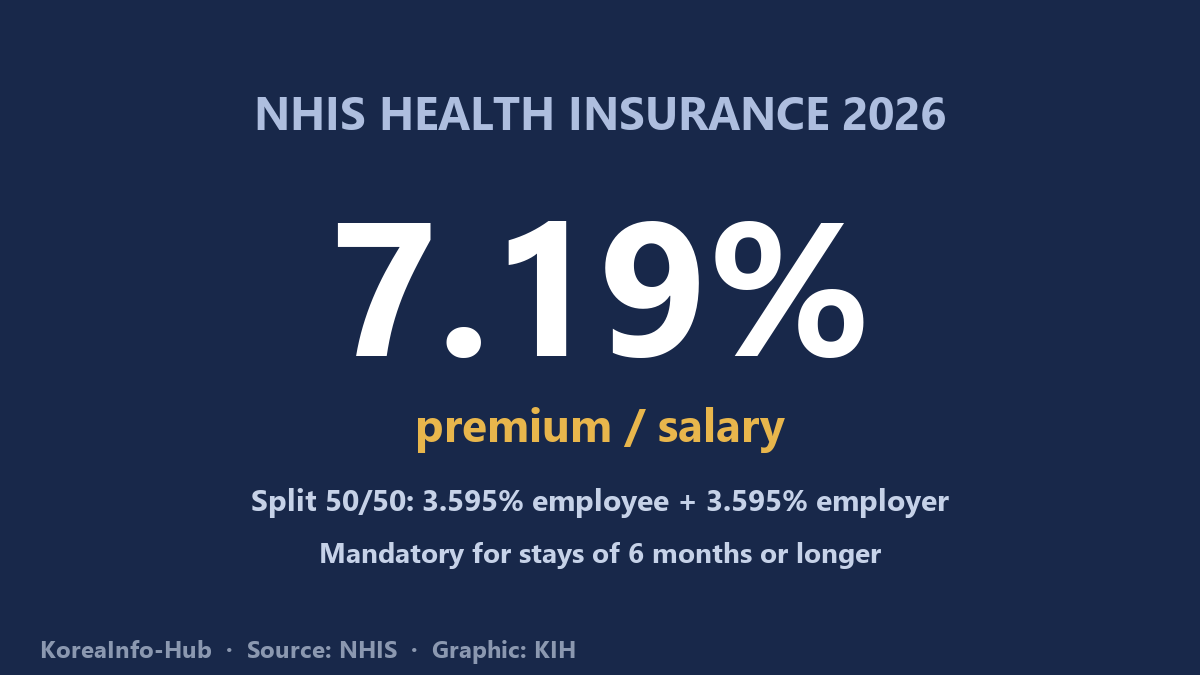
NHIS health insurance for foreigners: who must enroll, premiums and benefits
Foreigners residing in Korea for 6 months or longer must enroll in the National Health Insurance (NHIS). How premiums are calculated in 2026 for employees and regional subscribers, which statuses can enroll early, and what happens if you pay late.
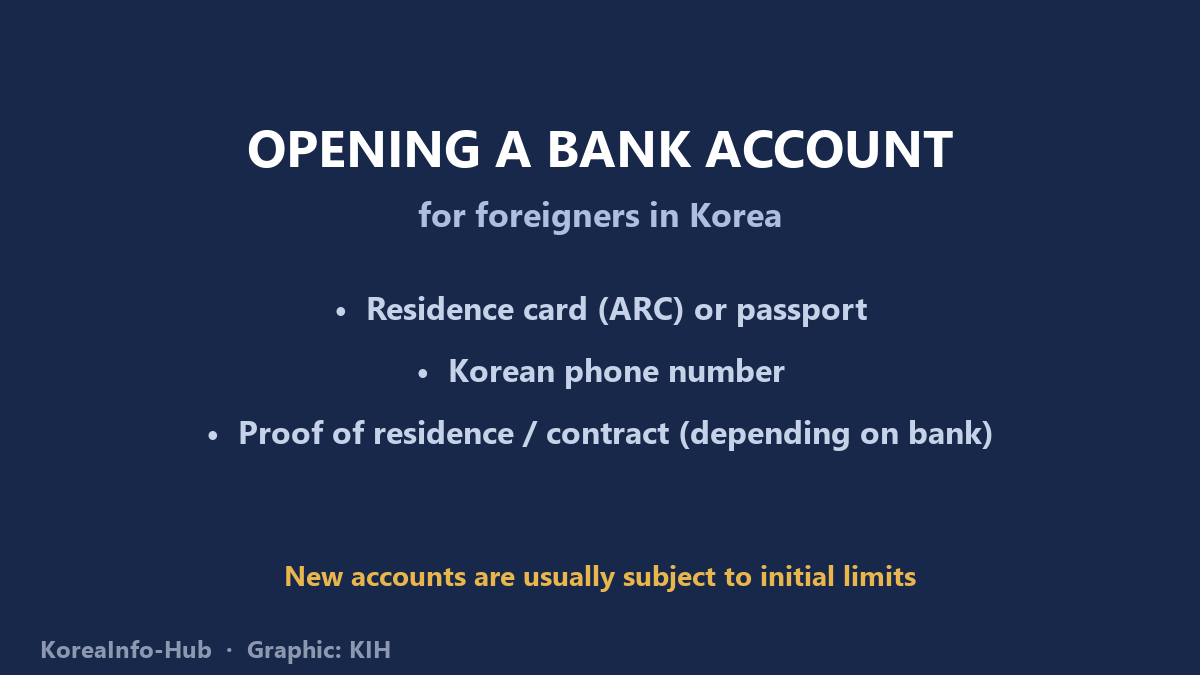
Opening a Bank Account for Foreigners in Korea: Required Documents and Things to Know
Having a Korean bank account is a near-mandatory step for receiving your salary, paying rent and using online services. Here are the documents to prepare, the basic steps and notes on account limits for newcomers.
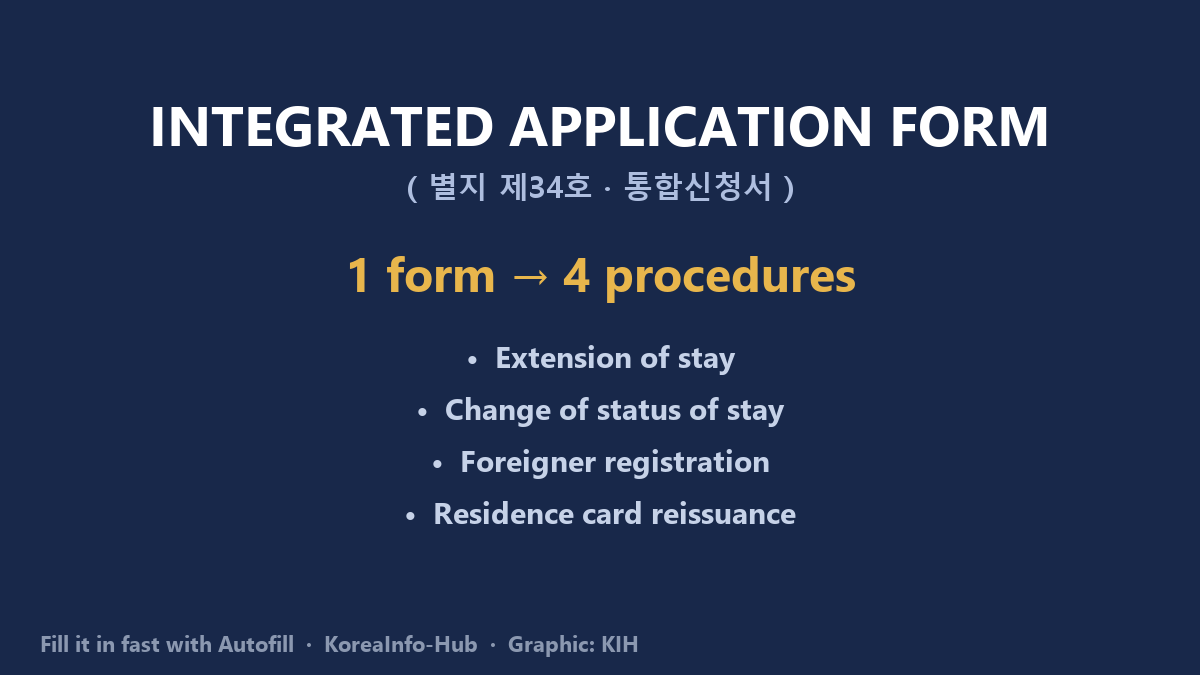
Extending or changing your status of stay: preparing documents with the integrated application form (통합신청서)
Most immigration procedures in Korea — extending your stay, changing your status, registering as a foreigner or reissuing your residence card — use one shared form: the integrated application form 통합신청서. Learn when you need it, what to prepare, and how to fill it in quickly and accurately.
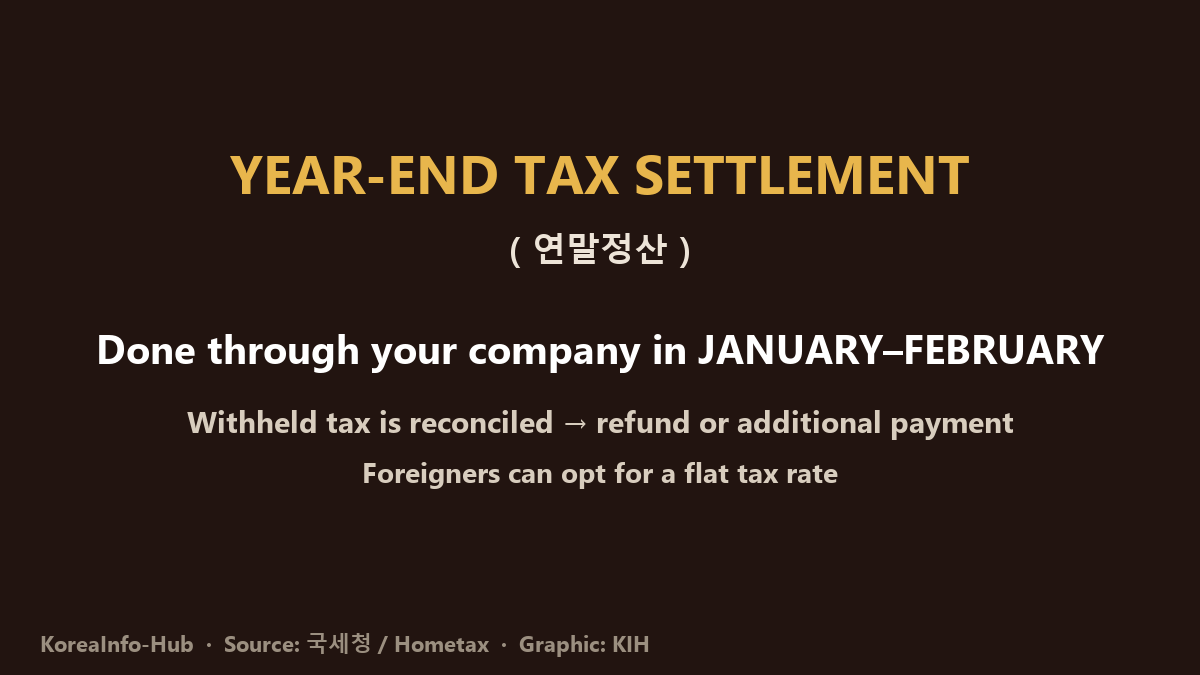
연말정산: what year-end tax settlement means for foreign workers and how it works
If you are an employee in Korea, every year your company carries out 연말정산 — the year-end income tax settlement — to recalculate the tax you actually owe. Understand the process, the deduction documents, and the flat tax rate option for foreigners.
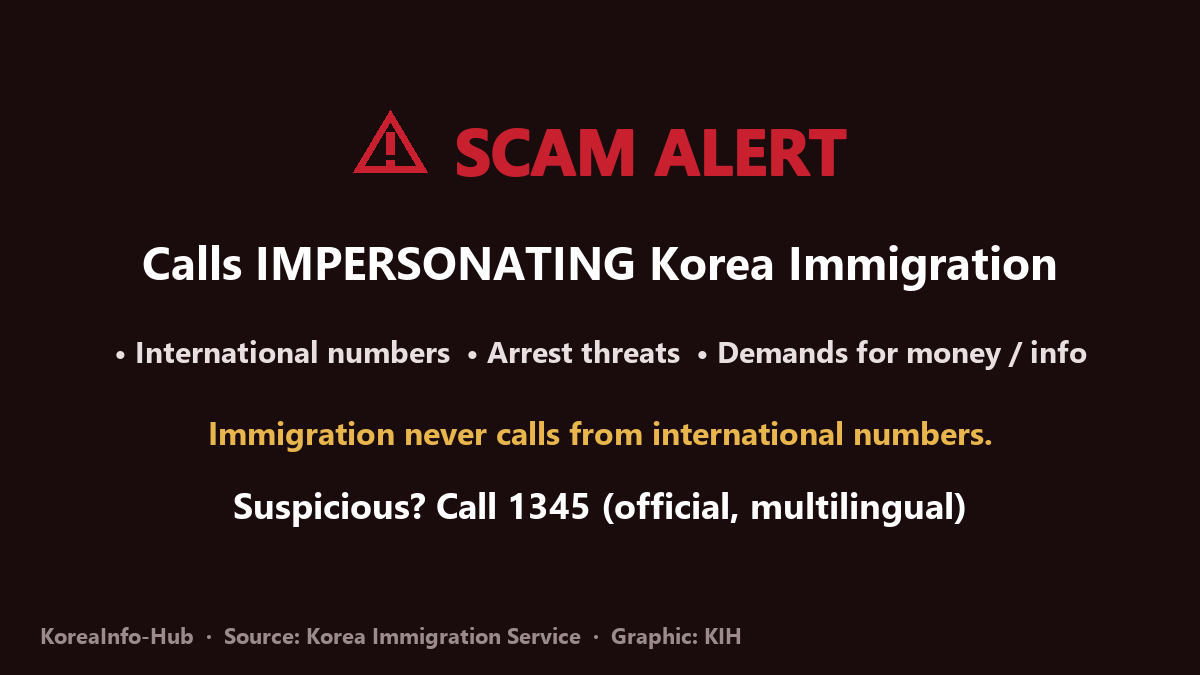
Alert: scam calls impersonating Korea Immigration target foreign residents
The Korea Immigration Service (Ministry of Justice) warns of voice-phishing calls impersonating the agency, using international numbers to threaten foreigners and extract information or money. How to spot and handle them.
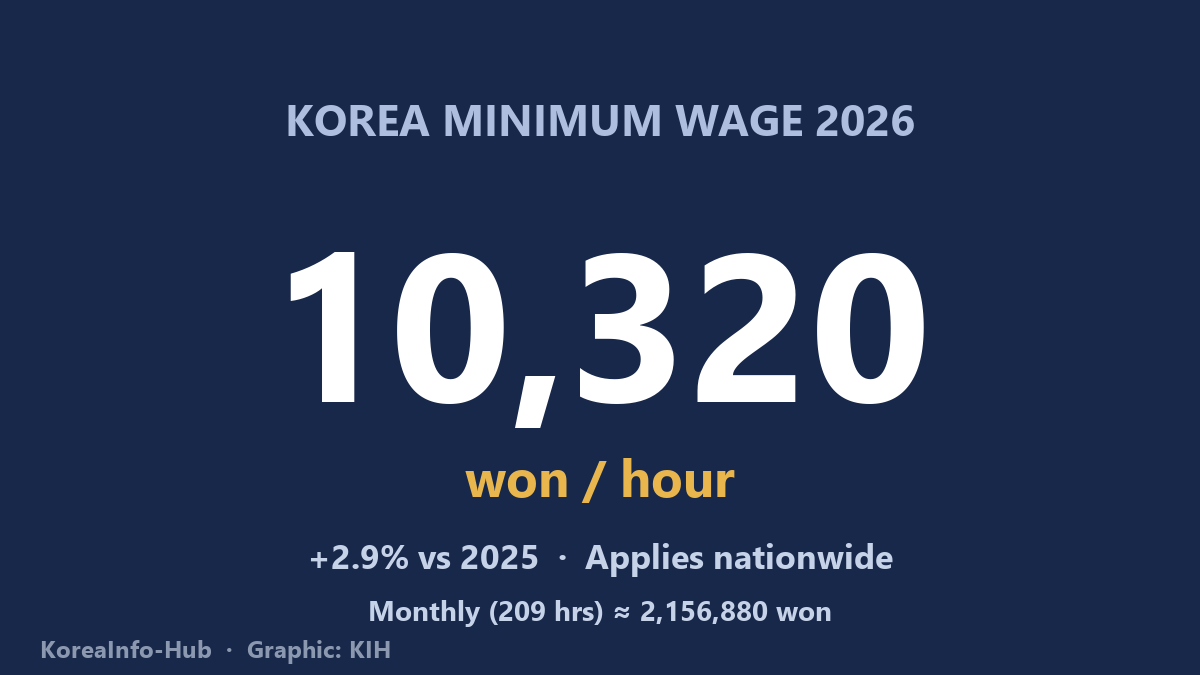
2026 minimum wage rises to 10,320 won/hour: what foreign workers should know
From 1 January 2026, Korea's minimum wage is 10,320 won/hour (up 2.9%). It applies nationwide to most foreign workers, including E-9 and E-7 — how to convert it to monthly pay and check your contract.